Doctoral Journeys–Beyond the Doctorate: Researcher Voice, Insight, and Identity

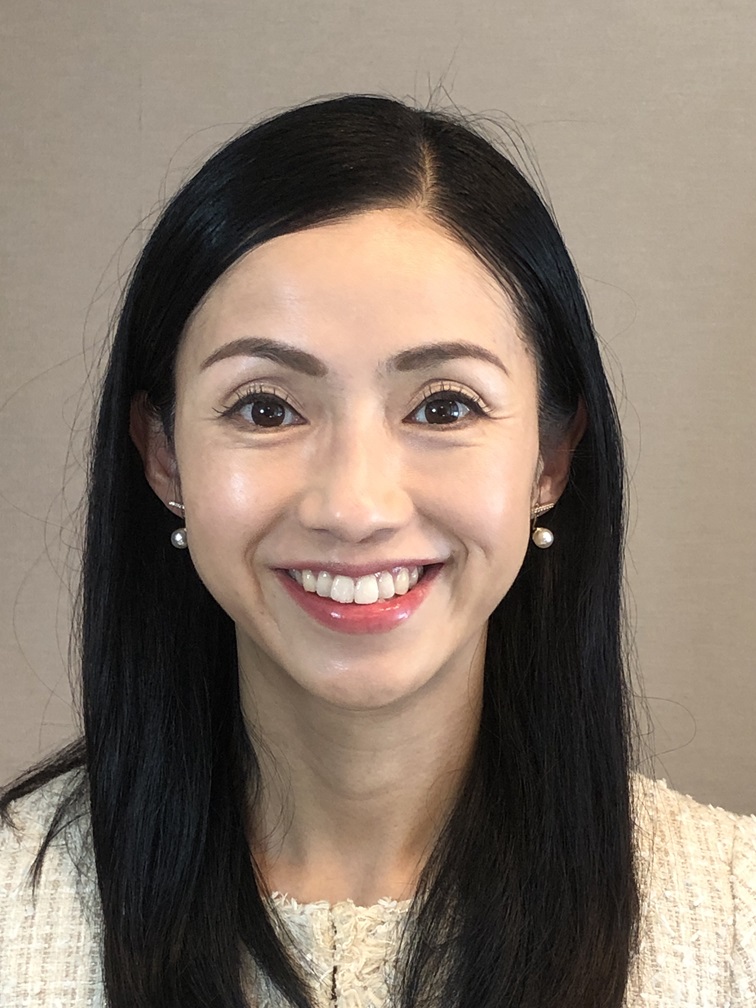
Author: Yumiko F. Imanishi
Abstract
Doctoral Journeys – Beyond the Doctorate: Researcher Voice, Insight, and Identity is a reflective blog and podcast exploring doctoral journeys and academic identities.
Through interviews with researchers, each episode addresses the question “What does the doctorate mean for you?” and connects personal narratives with literature introduced by the guest.
Interview topics include researcher motivation, academic well-being, and post-doctoral growth. Written reflections deepen links between lived experience and theory.
This multimodal platform explores the integration of podcast and blog formats to illuminate what it means to become and continue becoming a researcher within the academic landscape in language and international education.
Introduction
Doctoral Journeys—Beyond the Doctorate: Researcher Voice, Insight, and Identity is a reflective blog and podcast series that highlights conversations with researchers and educators about their doctoral paths and evolving academic identities.
Each episode traces personal stories from doctoral journeys to current academic practices, featuring literature tied to the guest’s academic field and concepts relevant to language and international education.
Written reflections by the host deepen connections between experience and theory.
Centred on audio-recorded interviews responding to the question, “What does the doctorate mean for you?”, the series explores how academic identities continue evolving after degree completion—emphasising researcher development, scholarly motivation, and professional meaning-making.
While teacher development is widely documented (Borg et al., 2022; Díaz Maggioli, 2020; Vadivel et al., 2021), researcher growth, motivation, and academic identity remain underexplored (Åkerlind, 2008; Clegg, 2008).
This initiative amplifies marginalised voices and invites storytelling around the emotional, philosophical, and professional dimensions of academic work.
Published via SAJILE, the series connects guest experiences and host reflections to illuminate transformative moments in language and international education.
Why Academic Blogging?
This academic blog responds to evolving scholarly practices by offering a reflective and accessible space where narratives unfold beyond conventional formats.
Traditional outputs, such as peer-reviewed journals, often prioritise objectivity, disciplinary norms, and institutional metrics.
In contrast, blogging fosters dialogic engagement, researcher voice, and the integration of personal experience with academic work (Kirkup, 2010).
As Gregg (2006) suggests, scholarly blogging can serve as conversational scholarship, making academic work accountable and meaningful to audiences within and beyond the academy.
Blogging offers a space for engaged audiences to explore academic identity, motivation, and growth.
It extends podcast dialogue, offering room to pause, rethink, and grow.
This reflective space links literature with lived experience and highlights researcher agency voiced by guests in language and international education. It invites thinking academically without always writing academically.
Methodology
Grounded in narrative inquiry (Connelly & Clandinin, 2006) and reflective interviewing (Clegg, 2008), this methodology combines personal storytelling with reflection.
Narrative inquiry views experience as storied, inviting researchers to share moments that shape their academic identities.
Reflective interviewing supports this by offering structured prompts ahead of each podcast recording, allowing participants time to consider their journeys, transitions, and key readings.
These dialogues form the basis for blog entries that draw out recurring themes such as motivation and identity while honouring the uniqueness of each voice.
By linking individual narratives with ongoing conversations in language education, the series cultivates insight and connection across media. The details of the podcast are presented in Table 1.

First Guest Announcement
I am delighted to welcome Professor Sin-Wang Chong as our first guest.
Acknowledgement
Grateful to Mario Velazquez for his editorial support in bringing this initiative to publication.
References
- Åkerlind, G. S. (2008). Growing and developing as a university researcher. Higher Education, 55(2), 241–254. https://doi.org/10.1007/s10734-007-9052-x
- Borg, S., Anderson, J., Beaumont, B., Xie, K., Guo, Y., Thorburn, R., Choi, T., Kim, H. J., Aizawa, I., & Fujinaga, K. (2022). The continuing professional development experiences and needs of English language teachers (Countries: China, Japan and Korea). British Council. https://www.britishcouncil.jp/sites/default/files/cpd_research_china_japan_korea.pdf
- Clegg, S. (2008). Academic identities under threat? British Educational Research Journal, 34(3), 329–345. https://doi.org/10.1080/01411920701532269
- Connelly, F. M., & Clandinin, D. J. (2006). Narrative inquiry. In J. L. Green, G. Camilli, & P. B. Elmore (Eds.), Handbook of complementary methods in education research (pp. 477–487). Lawrence Erlbaum Associates Publishers.
- Díaz Maggioli, G. (2020). Continuous professional development: The seeds of professionalism. In G. Díaz Maggioli (Ed.), Professionalizing your English language teaching (pp. 253–262). Springer. https://doi.org/10.1007/978-3-030-34762-8_21
- Gregg, M. (2006). Feeling ordinary: Blogging as conversational scholarship. Continuum: Journal of Media & Cultural Studies, 20(2), 147–160. https://doi.org/10.1080/10304310600641604
- Kirkup, G. (2010). Academic blogging, academic practice and academic identity. London Review of Education, 8(1), 75–84. https://doi.org/10.1080/14748460903557803
- Vadivel, B., Namaziandost, E., & Saeedian, A. (2021). Progress in English language teaching through continuous professional development—Teachers’ self-awareness, perception, and feedback. Frontiers in Education, 6, Article 757285. https://doi.org/10.3389/feduc.2021.757285
博士課程の旅 ― 博士号を超えて:研究者の声、洞察、アイデンティティ
はじめに
「博士課程の旅 ― 博士号を超えて:研究者の声、洞察、アイデンティティ」は、博士課程を経た研究者や教育者たちの対話を通じて、個人の経験と学術的アイデンティティの変化を考察するブログおよびポッドキャストシリーズである。本シリーズは、各エピソードにおいて、博士課程の歩みとその後の教育・研究活動にまつわる個人的な語りを扱い、ゲストの研究者の専門分野に関連する文献や言語教育・国際教育に関わる概念を紹介する。ホストによるブログでの省察が、研究者の活きた経験と理論を深く結びつける役割を担う。シリーズは「博士号はあなたにとって何を意味するか?」という問いに応える音声インタビューを中心に構成されており、博士号取得後も続く学術的アイデンティティの形成を扱う。研究者としての成長、動機づけ、意味形成に焦点が当てられる。教師教育に関する研究は広く行われているが(Borgほか, 2022; Díaz Maggioli, 2020; Vadivelほか, 2021)、研究者としての成長や動機づけ、アイデンティティに関する知見は十分に蓄積されているとは言えない(Åkerlind, 2008; Clegg, 2008)。本プロジェクトは、これまで十分に取り上げられてこなかった研究者の声を可視化し、学術活動における感情的・哲学的・プロフェッショナルな物語を紡ぐスペースとなる。SAJILEを通じて発信される本シリーズは、ゲストの研究者の経験とホストの省察を結びつけながら、言語教育および国際教育において変革をもたらす瞬間を照らし出している。
なぜアカデミック・ブログなのか
本ブログは、変化し続ける学術的実践に応える取り組みとして、従来の形式にとらわれない語りの展開を可能にする、内省的で容易にアクセスできる空間を提供している。査読付き学術誌などの伝統的な成果物は、客観性、専門性、制度的評価基準を重視する傾向がある。一方、ブログは対話的なやりとり、研究者の声、個人的経験と学術的活動の統合を促進する手法として位置づけられる(Kirkup, 2010)。Gregg(2006)の見解によれば、学術ブログは会話を基盤とした学問の一形態として機能し、学術的活動を学外を含む幅広い読者にとって意味あるものにする可能性がある。ブログは、読者にとって学術的アイデンティティ、動機、成長といったテーマについて考察を深める空間を提供する。また、ポッドキャストにおける対話を広げ、立ち止まり、再考し、成長の余地を生む。本ブログは、文献と実体験を結びつけ、言語教育と国際教育の場における研究者の主体性を浮かび上がらせる。必ずしも学術的な文体で書かなくても学術的に考えることは可能であることを示す。
方法論
本シリーズの方法論は、物語探究(Connelly & Clandinin, 2006)と内省的インタビュー(Clegg, 2008)に基づく。個人の語りと内省を融合させることで、研究者それぞれの学術的アイデンティティの形成過程を描く。ポッドキャストでの物語探究は、経験を語られた物語として捉え、研究者がアイデンティティに影響を与えた瞬間を共有することを促す。内省的インタビューは、各エピソードの収録前に構造化された問いを提示することで、ゲストの研究者が自身の歩み、転機、影響を受けた文献などについて熟考する機会を提供する。これらの対話は本ブログ記事の素材となり、動機づけやアイデンティティといった共通のテーマを引き出しつつ、各研究者の語りの独自性を尊重する。個々の語りと言語教育の分野での継続的な議論とを結びつけることで、メディアを越えた洞察と共感の空間を創出している。
初回ポッドキャスト&ブログ登場ゲストのお知らせ
初回ゲストとして、Sin-Wang Chong教授をお迎えできることを大変嬉しく思います。
Review by Beatriz Erazo
‘Doctoral Journeys—Beyond the Doctorate: Researcher Voice, Insight, and Identity’ could be a great addition to a blog related to the field of language and international education. The author thoughtfully introduced a podcast and blog series that focused on the real-life experiences of PhD graduates. It combines personal stories, academic reflection, and exploration of academic identity, motivation, and well-being.
The first thing that caught my attention was how relevant it is. It goes well with SAJILE’s goal of giving more attention to voices that aren’t often heard, especially those of teachers and researchers who are trying to find their way in postdoctoral settings. The multimodal format, combining podcasting and blogging, is an interesting way to share academic work. It helps with research as well as teaching and also suggests reflecting in a way that is easy to understand and rich.
The blog is well-organized. The writing is professional but friendly, so it works for both academics and professionals. I liked how narrative inquiry and reflective interviewing were used as methodological anchors.
The tone is very interesting too. It encourages readers to think about their own academic journeys through dialogue and community creation. I would suggest a few small changes, like making some of the longer sentences easier to understand for a wider audience and adding a short call to action at the end to get readers involved.
Read in the journal
https://doi.org/10.15664/wpwk9350
This is the first post of a blog series that pairs podcast episodes with academic blog entries. The focus of this multi-modal series is on doctoral journeys, considering in particular the lasting impact of doctoral study beyond completion of the research programme. This novel series will be a useful resource for both prospective and current doctoral students in any discipline, but in particular those focused on international, language and teacher education. By offering a window into other people's doctoral journeys, and the subsequent impact of these, the series should help those pursuing (or considering pursuing) a doctorate to develop a clearer vision and goals for their own future doctoral journey and career path.
Thank you very much for your thoughtful comments. It truly encouraged me to embark on this new project. I'm honored to contribute the inaugural post of a blog series that integrates podcast episodes with academic entries for SAJILE. As you noted, I hope this initiative will resonate with both prospective and current students, educators across disciplines, and our interviewees, offering them a platform to share their work and stories with a broader audience. In addition, I would be delighted if professional staff members could engage with these stories as part of the audience, fostering reflection on their own work and contributing to the continued development of our department and university.